Your shopping cart is empty!

GigantSeo - Store SEO Center
Price: 5 000 ₽ 10 000 ₽
From 2 purchase of this product, the price is: 4 500 ₽
From 5 purchase of this product, the price is: 4 250 ₽
From 10 purchase of this product, the price is: 4 000 ₽
Author: SirGrey
Write to the author
Need paid help? Contact the site administration
Opencart version:
Need paid help? Contact the site administration
Opencart version:
LiveStore 3.*OCStore 3.*OpenCart 3.*
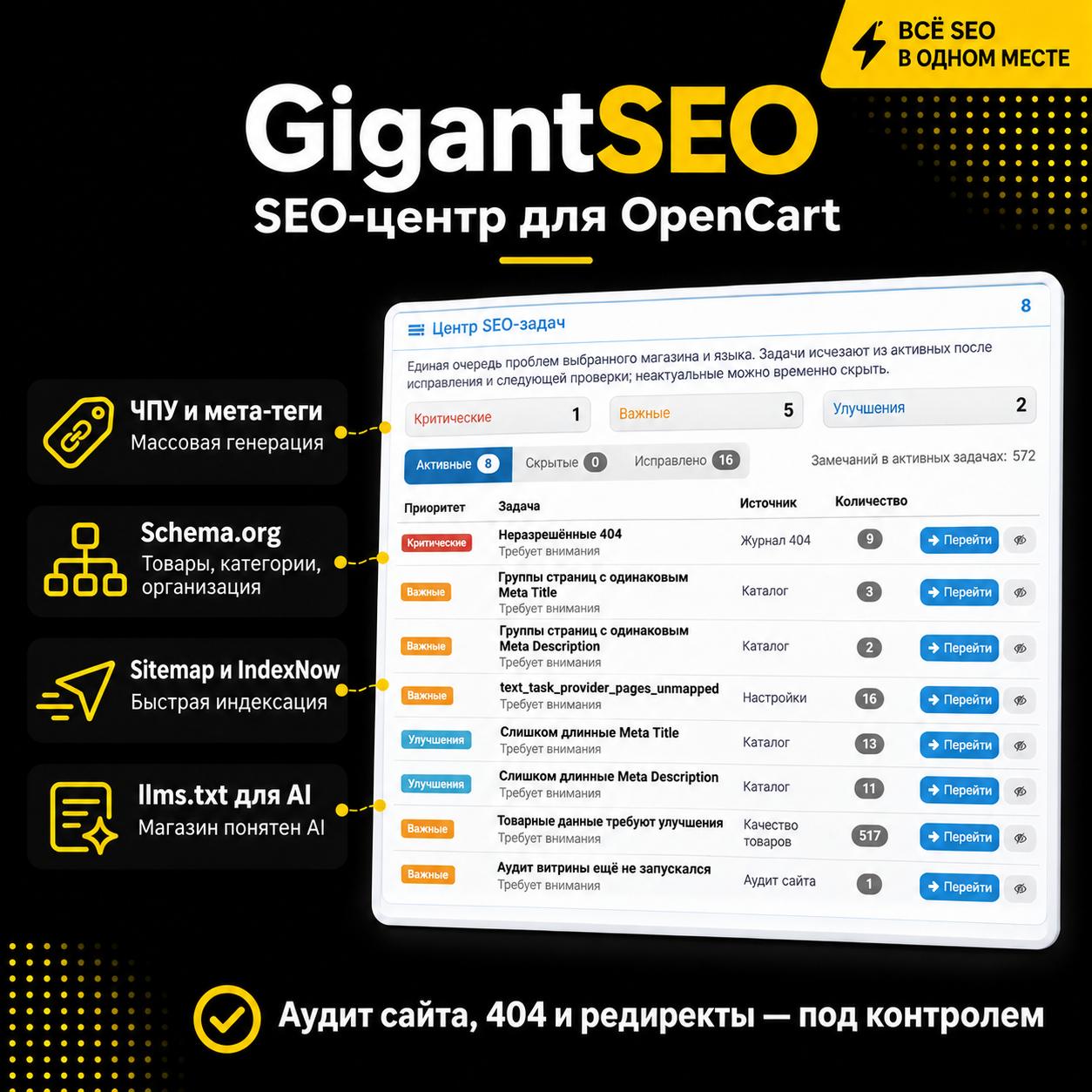
GigantSeo - SEO center for your store: friendly URLs, meta tags, microdata, sitemap, audit, LLMS, IndexNow, and much more.
One module instead of a bunch of separate ones. URLs, meta tags, microdata, sitemap, redirects, analytics, and audits – all in one place, with shared settings and a common log. It does what usually requires cobbling together multiple extensions and theme edits.
Demo
https://demo.gigantstore.ru/
Control panel
https://demo.gigantstore.ru/admin/
demo
demo
Compatibility
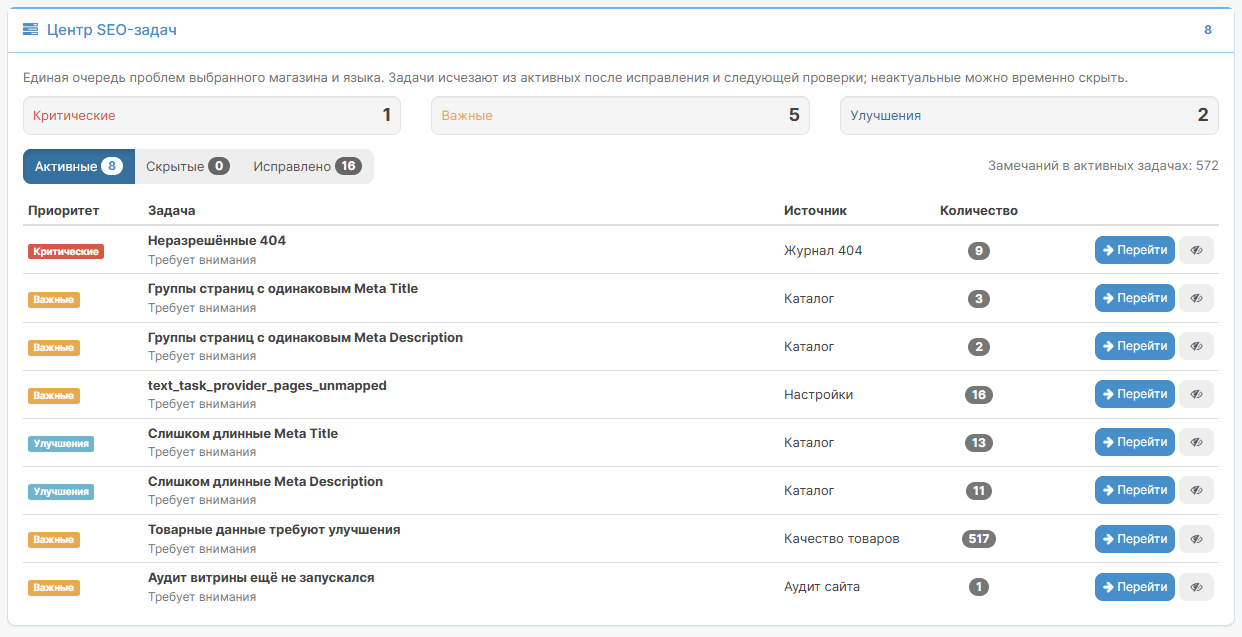
Overview: The module shows what's wrong with the store
Task queue by importance - products without addresses, without Titles, sections without descriptions, unresolved 404s, product data errors. Not "another set of fields," but a place where people come to work: you can see where to start and how much is left.
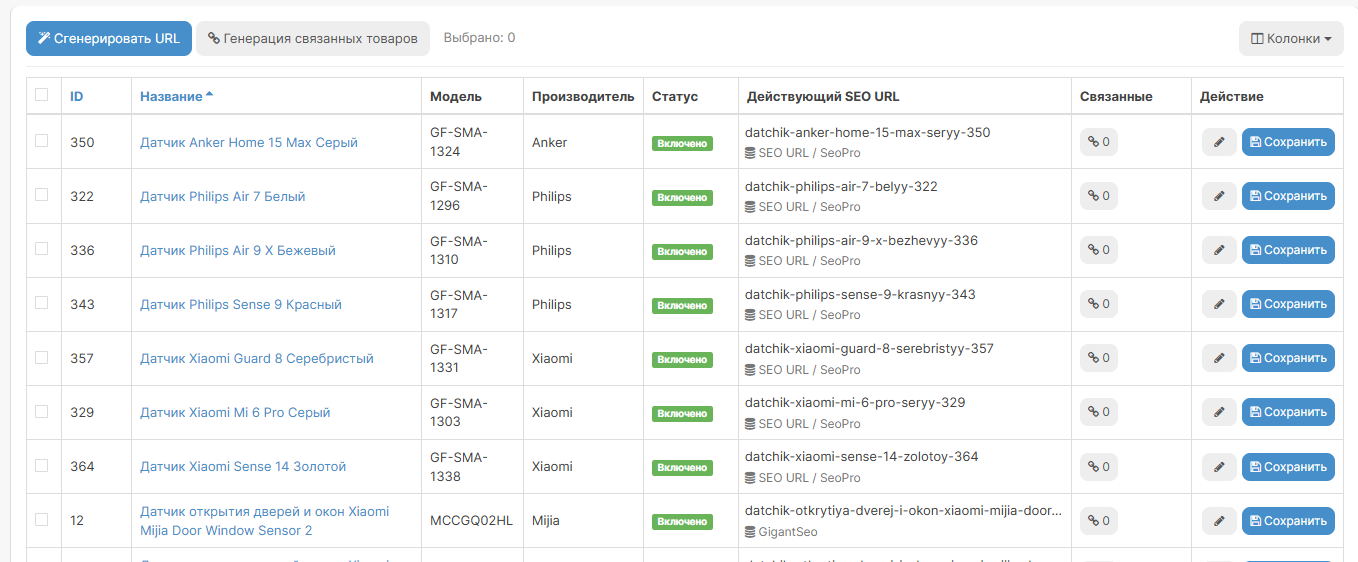
SEO URL: URL list, with bulk generation
Clean URLs for products, sections, brands, and detail pages. Template generation with transliteration, editing directly in the list, filters by status and completeness, CSV export, bulk operation history with rollback.
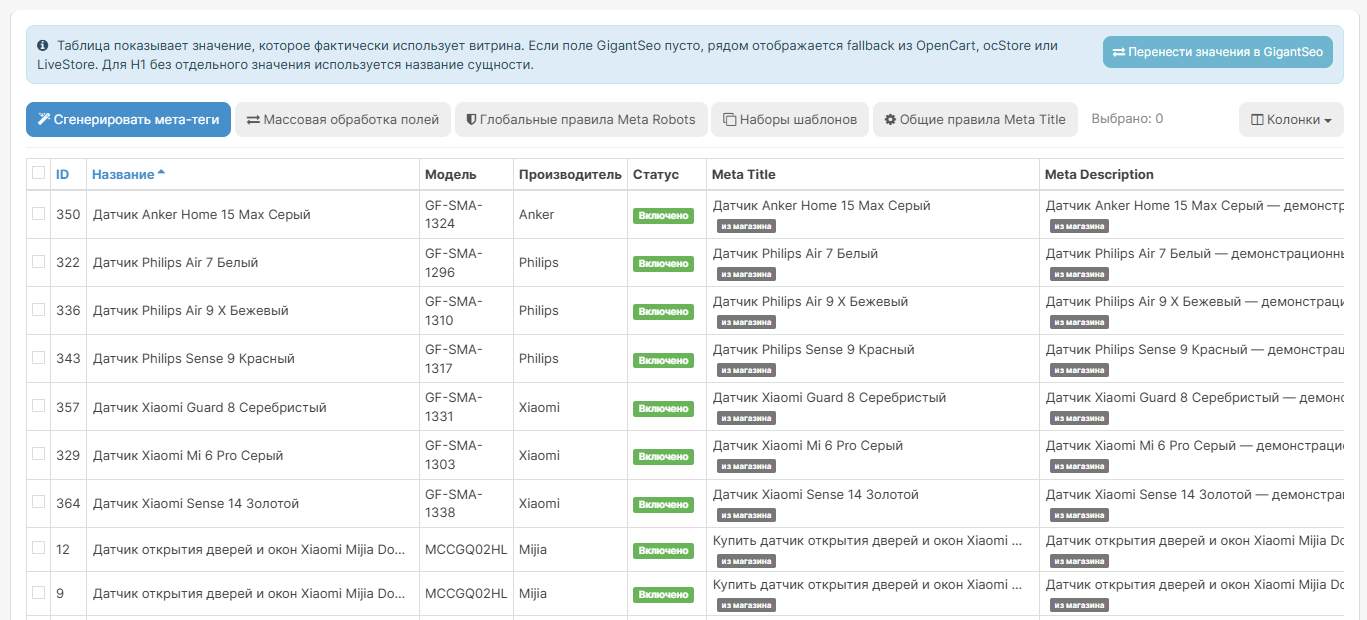
Meta Tags: Templates with Variables and Conditions
Filling Title, Description, H1, and ALT fields using a template - for the entire catalog or selected rows. Product, section, brand, and store variables, conditions like "if the title doesn't contain the brand, add it," and length counters.
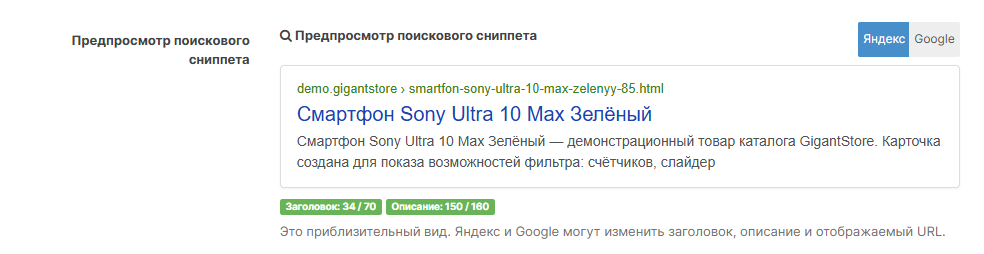
Result preview directly in the product card
Module tab in the product and section card: fields, page SEO analysis, social media - and preview Yandex and Google snippets. Showsthe URL under which the page is published- with the language prefix, section chain, and postfix, not the bare key.
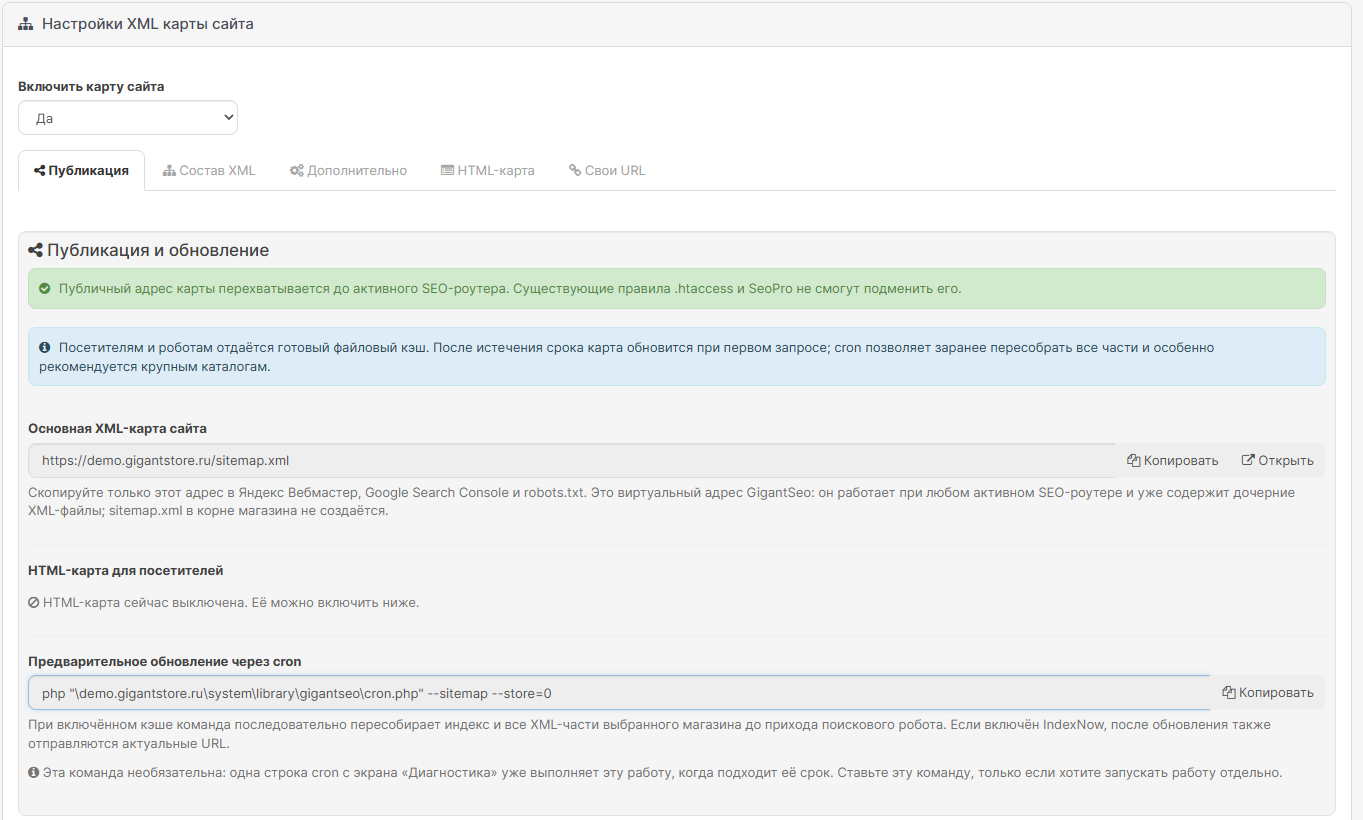
XML sitemap
Map with sections, images, and language alternatives. The public URL is adjusted to the active SEO router; it is updated on a schedule; manual generation is not required.A separate HTML sitemap is available for visitors.
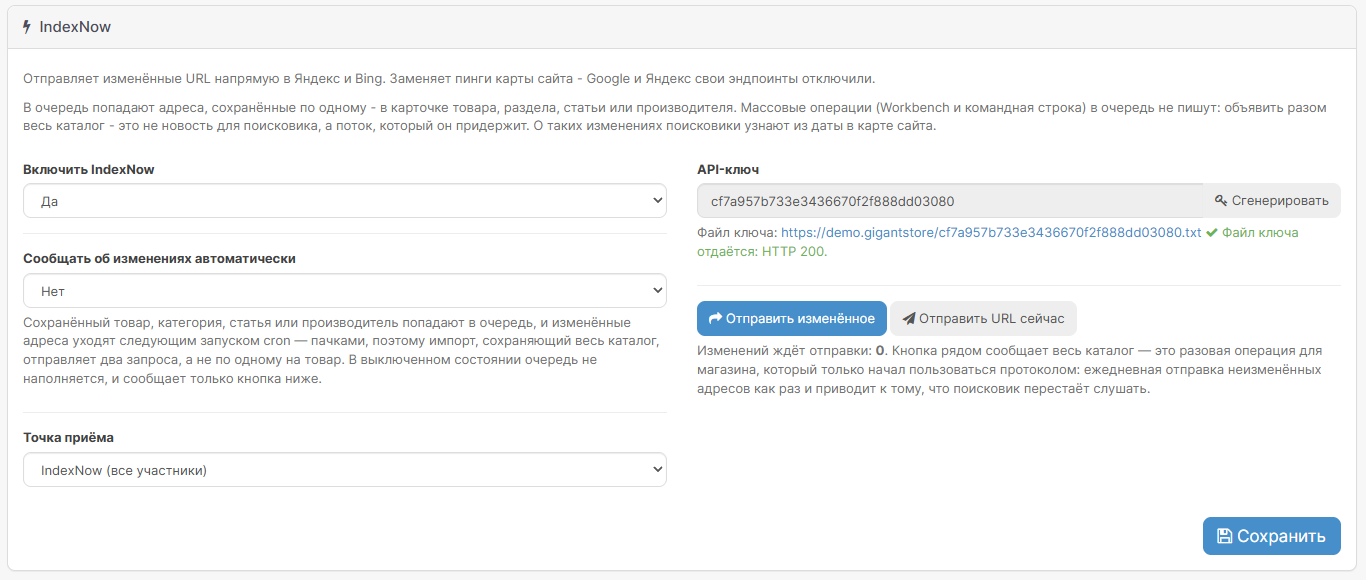
IndexNow: the search engine is notified of the change immediately
Changed Addresses go directly to Yandex and Bing without waiting to be crawled. Google disabled its sitemap ping, and so did Bing—IndexNow has replaced them. Save a product, category, or article—the address is queued and sent with the next cron run.
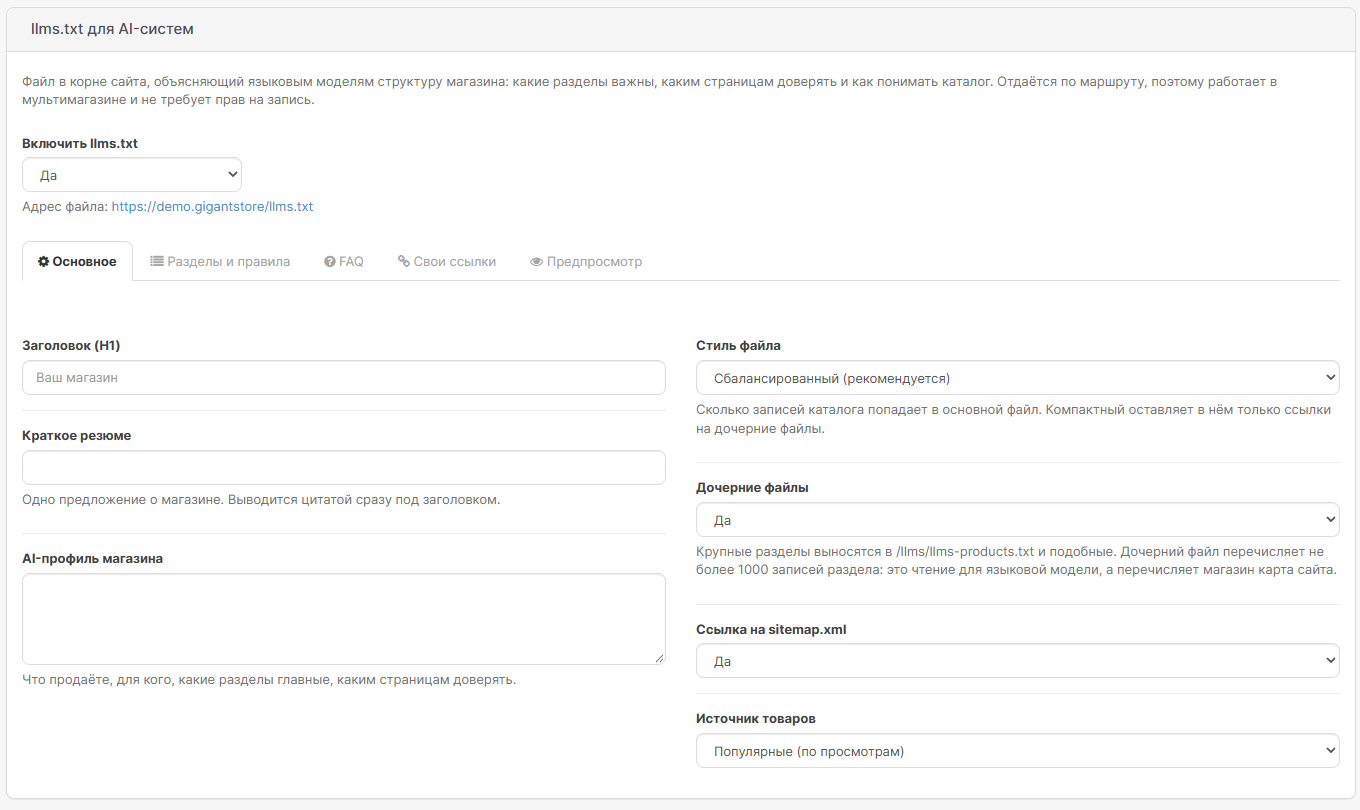
llms.txt: store understood by language models
A file in the root of the site that explains the store structure to AI systems: which sections are important, which pages to trust, how to understand the catalog. It's sent by route, so it works in multiple stores and doesn't require write access.
Schema.org microdata
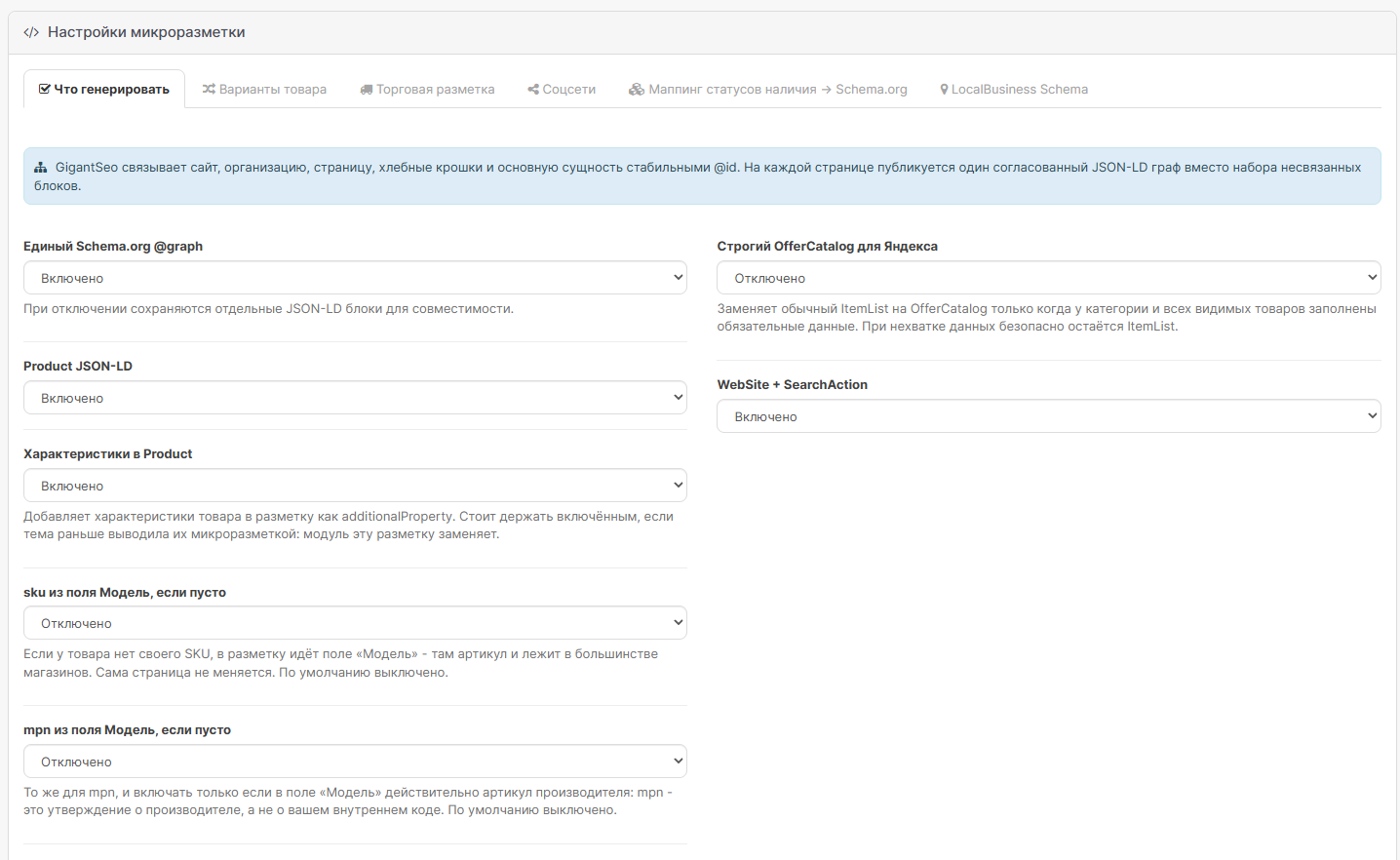
Product with price and availability, CollectionPage for sections, BreadcrumbList, Organization, WebSite with SearchAction, ContactPage, and LocalBusiness. One linked @graph per page instead of a bunch of unrelated blocks—and no duplication with your theme.
Redirects and log 404
Management Indexing
Product quality data
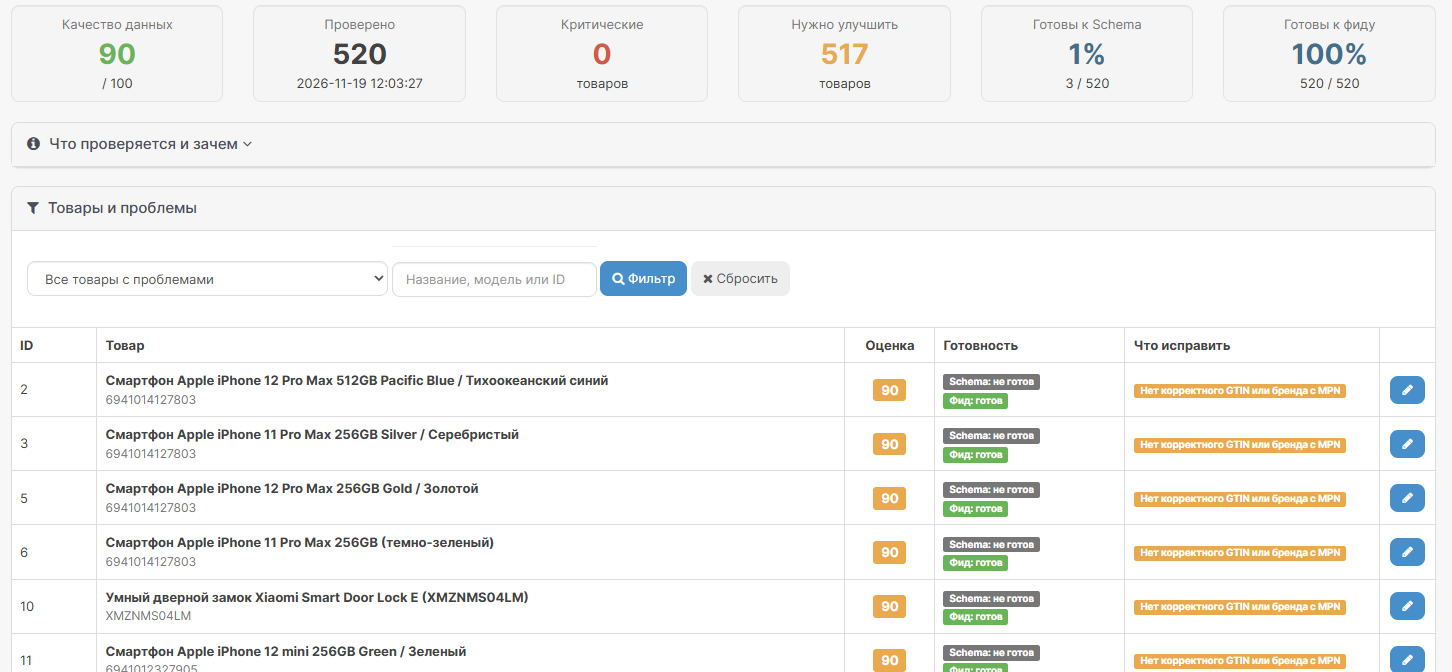
Catalog rating from 0 to 100 and a list of factors preventing the product card from appearing in the search results: missing main image, incorrect price, missing brand, missing distinctive GTIN or MPN. You can see which products are Schema.org-ready and product feed-ready, and which are not.
Site audit: crawling with your own crawler
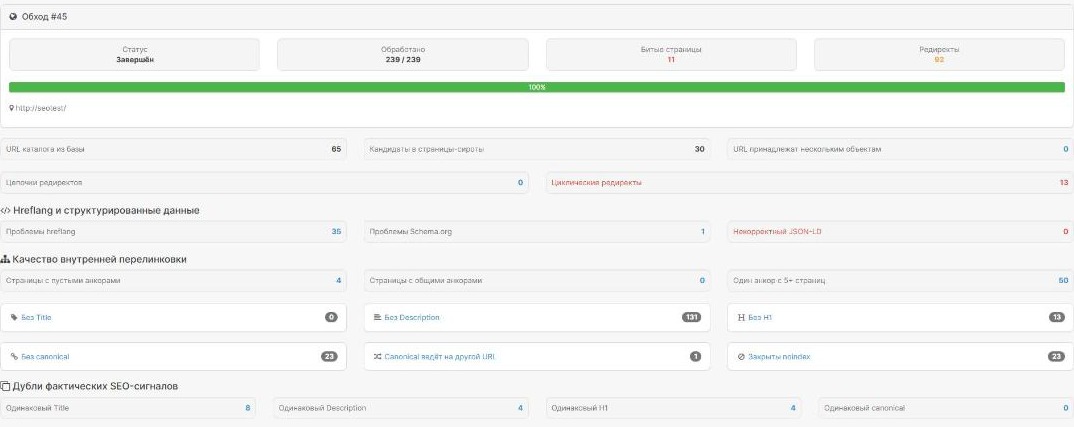
The module automatically crawls the storefront and compiles a report: broken pages, redirect chains and loops, pages without Title, Description, H1, and canonical, duplicate actual SEO signals, hreflang and Schema.org issues, internal linking quality, and orphaned pages. It only reads - it doesn't change anything.
Other checks
Analytics
What's included
Module archive and seven theme compatibility packages - you install only the ones your theme needs.
The archive contains instructions in Russian and English: requirements, step-by-step installation, cron command, and what to do if something goes wrong.
Installation
License
By purchasing the module, you gain the right to use it on one domain. Access to module updates for one year.
The module is supplied "as is": compatibility has been confirmed for the combinations listed above.
OpenCart allows multiple modifiers to run simultaneously, modifying the same files, so conflicts with third-party templates and extensions are possible and are not a defect of the module.
One module instead of a bunch of separate ones. URLs, meta tags, microdata, sitemap, redirects, analytics, and audits – all in one place, with shared settings and a common log. It does what usually requires cobbling together multiple extensions and theme edits.
Demo
https://demo.gigantstore.ru/
Control panel
https://demo.gigantstore.ru/admin/
demo
demo
Compatibility
- OpenCart3.x;
- AssembliesocStoreandLiveStore3.0.4.x and 3.0.5.x;
- Themes: standard,UniShop2,Prostore,Mango,Revolution,FrameTheme,GigantStore- each except the standard one comes with its own compatibility pack;
- Works alongsideSeoPro(two different builds)GigantFilterandFilterViewer;
- Multiple storefronts and multiple languages;
Overview: The module shows what's wrong with the store
Task queue by importance - products without addresses, without Titles, sections without descriptions, unresolved 404s, product data errors. Not "another set of fields," but a place where people come to work: you can see where to start and how much is left.
SEO URL: URL list, with bulk generation
Clean URLs for products, sections, brands, and detail pages. Template generation with transliteration, editing directly in the list, filters by status and completeness, CSV export, bulk operation history with rollback.
- Chain of sections in the product URL - with selection of the main section for the path;
- Postfixes (.html) and trailing slash - as is customary for your build;
- Migrating from old SEO solutions without losing URLs;
- Custom routes: custom URLs for system pages;
- Synchronization with the seo_url table Store.
Meta Tags: Templates with Variables and Conditions
Filling Title, Description, H1, and ALT fields using a template - for the entire catalog or selected rows. Product, section, brand, and store variables, conditions like "if the title doesn't contain the brand, add it," and length counters.
- List editing without going into each product card;
- Global meta robots and indexing rules;
- CSV import and export;
- Separate values for each language and each storefront.
Result preview directly in the product card
Module tab in the product and section card: fields, page SEO analysis, social media - and preview Yandex and Google snippets. Showsthe URL under which the page is published- with the language prefix, section chain, and postfix, not the bare key.
XML sitemap
Map with sections, images, and language alternatives. The public URL is adjusted to the active SEO router; it is updated on a schedule; manual generation is not required.A separate HTML sitemap is available for visitors.
- Map sections: products, categories, brands, detail pages, custom addresses;
- Product images on the map - according to the Google extension scheme;
- Hreflang language alternatives, including x-default;
- Serving via the store router: no files are created in the root directory.
IndexNow: the search engine is notified of the change immediately
Changed Addresses go directly to Yandex and Bing without waiting to be crawled. Google disabled its sitemap ping, and so did Bing—IndexNow has replaced them. Save a product, category, or article—the address is queued and sent with the next cron run.
llms.txt: store understood by language models
A file in the root of the site that explains the store structure to AI systems: which sections are important, which pages to trust, how to understand the catalog. It's sent by route, so it works in multiple stores and doesn't require write access.
Schema.org microdata
Product with price and availability, CollectionPage for sections, BreadcrumbList, Organization, WebSite with SearchAction, ContactPage, and LocalBusiness. One linked @graph per page instead of a bunch of unrelated blocks—and no duplication with your theme.
- Product characteristics as additionalProperties;
- Strict OfferCatalog for Yandex - when the data is complete;
- Availability by balance status, including "on order";
- gtin and mpn from the "Model" field - by your decision, not guesswork.
Redirects and log 404
- Rules 301 and 302, including masks;
- Log of non-existent addresses with a hit counter and referral source;
- Bulk transfer of old addresses to new ones;
- "Page deleted" status with a 410 response;
- Counter of each rule hit.
Management Indexing
- Parameters (utm, sorting, filters) - what to close, what to merge, canonical;
- Pagination: canonical of the second page of your choice;
- robots.txt from the admin panel, with inconsistency checking;
- IndexNow with a store key and sending changed addresses;
- Confirmation codes for sites and Yandex.Webmaster.
Product quality data
Catalog rating from 0 to 100 and a list of factors preventing the product card from appearing in the search results: missing main image, incorrect price, missing brand, missing distinctive GTIN or MPN. You can see which products are Schema.org-ready and product feed-ready, and which are not.
Site audit: crawling with your own crawler
The module automatically crawls the storefront and compiles a report: broken pages, redirect chains and loops, pages without Title, Description, H1, and canonical, duplicate actual SEO signals, hreflang and Schema.org issues, internal linking quality, and orphaned pages. It only reads - it doesn't change anything.
Other checks
- BypassShowcases with their own crawler: broken links, redirect chains, duplicate Titles;
- Product data quality: what prevents a product card from appearing in search results;
- Placement diagnostics - what exactly controls the addresses in your store;
- First-run setup wizard: checks the infrastructure and enables what you need without guessing;
- Backup of settings and SEO data in a single file.
Analytics
- GA4 and Yandex.Metrica with cart and checkout events;
- Custom scripts in the head and before /body;
- Autolinks: keywords in descriptions are converted into links, with protection against the page linking to itself.
What's included
Module archive and seven theme compatibility packages - you install only the ones your theme needs.
The archive contains instructions in Russian and English: requirements, step-by-step installation, cron command, and what to do if something goes wrong.
Installation
- Extensions - Extension Installation - Upload the module archive;
- Upload your theme package, if needed;
- Extensions - Modifiers - "Update" button (required);
- Extensions - Modules - GigantSeo - Install and open;
- Enter the activation key, complete the wizard Settings.
License
By purchasing the module, you gain the right to use it on one domain. Access to module updates for one year.
The module is supplied "as is": compatibility has been confirmed for the combinations listed above.
OpenCart allows multiple modifiers to run simultaneously, modifying the same files, so conflicts with third-party templates and extensions are possible and are not a defect of the module.
Distribution method:
Paid
Opencart version:
LiveStore 3.*OCStore 3.*OpenCart 3.*
PHP verision:
PHP 5.6PHP 7.0PHP 7.1PHP 7.2PHP 7.3PHP 7.4PHP 8.1PHP 8.2PHP 8.3PHP 8.4PHP 8.5
Activation:
Manually, via the author's website
Getting files:
On author's site, after purchase
Protection system:
IonCube
VQmod:
No
Ocmod:
Yes
Events:
Yes
Uploaded:
20.11.2026
Updated:
20.11.2026
Viewed:
87
Write a comment
Your Name:Your comment: Note: HTML is not translated!
Rating: Bad Good
Enter the code in the box below:
Файлы будут доступны после покупки
Yet, no one has left a comment to the entry.


